


Tuesday, 07 October 2025
How to Become a Qualified Nurse in Germany: Your Complete Step-by-Step Guide
How to Become a Qualified Nurse in Germany: Your Complete Step-by-Step Guide
Germany is one of Europe’s top destinations for international nurses — and for good reason. With its world-class healthcare system, excellent working conditions, and high demand for skilled professionals, Germany offers nurses from around the world a stable and rewarding career path. If you’re a nurse dreaming of building your future in Germany, this guide will walk you through every step to becoming a qualified nurse (Pflegefachfrau / Pflegefachmann) and starting your new life in one of the most respected healthcare systems in the world.
Why Germany Needs International Nurses
Germany faces a growing shortage of healthcare professionals as its population ages and the demand for medical care increases. To fill this gap, the German government actively welcomes foreign-trained nurses through a clear and structured recognition process. What’s more — the government has simplified both the recognition and visa procedures, making it easier than ever for overseas nurses to move, work, and settle in Germany long-term.
1. Check Your Nursing Qualifications
To begin your recognition process, you must hold one of the following:
- BSc Nursing (4 years)
- General Nursing and Midwifery (GNM) diploma (3 years)
Both are eligible for recognition. The exact path may vary depending on how your training compares to German standards.
2.Prepare and Translate Your Documents
Before applying, ensure your documents are translated into German by a sworn translator. You’ll typically need:
- Passport
- Nursing degree or diploma certificate
- Detailed mark sheets and syllabus (with theory & clinical hours)
- Nursing Council registration certificate
- Certificate of Good Standing
- School-leaving certificates
- Work experience letters (if applicable)
- Proof of German language skills
- Police clearance certificate
- Medical fitness certificate
- Updated CV in German
💡 Tip: The required documents may vary depending on the state (Bundesland) you apply to, so confirm with the local recognition authority.
3. Choose Your German Federal State (Bundesland)
Each state has its own authority responsible for recognizing foreign nursing qualifications. Popular choices include:
- Bavaria: Bayerisches Landesamt für Pflege
- North Rhine-Westphalia: Bezirksregierung
- Hesse: Hessische Fachstelle für Pflegeberufe
Once your qualification is recognized in one state, it’s valid across all of Germany.
4. Learn German — Your Key to Success
Communication is at the heart of nursing. That’s why German language skills are essential.
Language proficiency requirements:
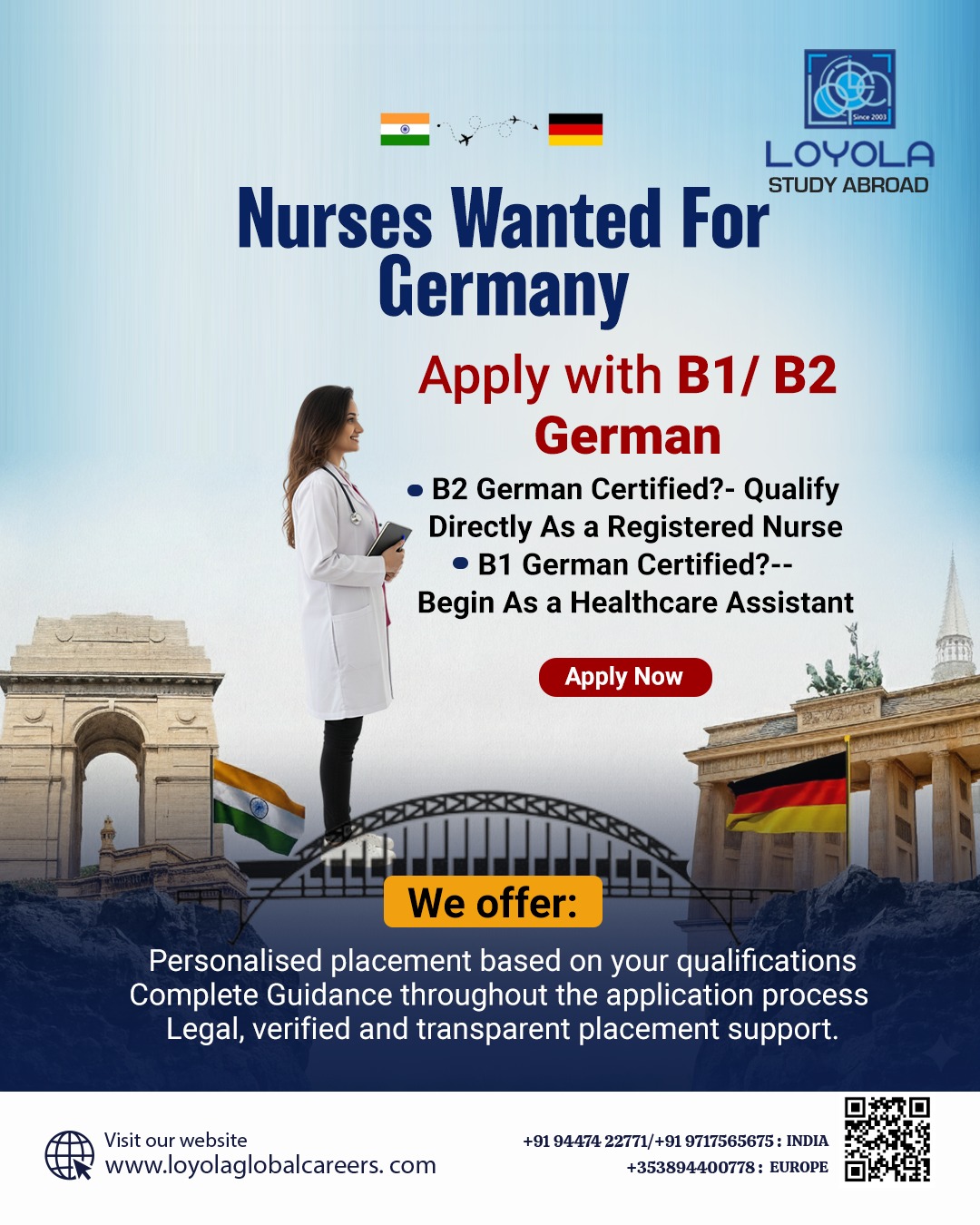
- B1 Level: Required to apply for recognition and a visa
- B2 Level: Required for full registration and to work as a staff nurse
Many nurses start as Nursing Assistants (B1 level) while upgrading to B2 through employer-supported training.
5. Apply for Recognition (Anerkennung)
Submit your application to your chosen state authority. After reviewing your documents, you’ll receive one of the following:
- ✅ Full Recognition — your qualification matches German standards
- ⚠️ Deficit Notice (Defizitbescheid) — outlines areas where additional training or exams are required
If you receive a deficit notice, you can choose between:
- Adaptation course (Anpassungslehrgang)
- Knowledge test (Kenntnisprüfung)
6. Apply for a Recognition Visa (if outside Germany)
If you’re applying from abroad, you’ll need a Visa for Recognition of Foreign Qualifications (under §16d of the German Residence Act). With your Deficit Notice, B1 certificate, and job offer, you can:
- Enter Germany
- Work as a Nursing Assistant or Recognition Nurse
- Complete your adaptation programme
- Upgrade your language level to B2
7. Complete Your Adaptation or Exam
Depending on your deficit notice, you’ll either:
- Attend an adaptation programme (6–12 months) in a hospital or nursing school
- Take the knowledge test at an authorized institute
After completing the requirements and achieving B2, you’ll receive your official German Nursing Licence.
8. Receive Full Recognition
Congratulations! You’re now licensed to work as a registered nurse in Germany, officially titled Pflegefachfrau / Pflegefachmann.
9. Begin Your Nursing Career in Germany
Salary Overview:
- Staff Nurse (B2): €3,200–€3,800 gross/month
- Nursing Assistant (B1): €2,300–€2,800 gross/month
Public sector hospitals follow TVöD tariff-based pay, plus night, weekend, and holiday bonuses. You’ll also enjoy benefits like paid leave, health insurance, pension contributions, and a pathway to permanent residence.
Summary: Your Nursing Journey at a Glance
Step Overview:
| Step | Description | German Level |
|---|---|---|
| 1 | Nursing qualification from home country | – |
| 2 | Prepare documents & translations | – |
| 3 | Choose state authority | – |
| 4 | Learn German | B1–B2 |
| 5 | Apply for recognition | B1 |
| 6 | Receive Deficit Notice | – |
| 7 | Apply for recognition visa | B1 |
| 8 | Complete adaptation / test | B2 |
| 9 | Get full licence | ✅ |
| 10 | Work as a staff nurse | B2 |
Why Build Your Nursing Career in Germany?
Benefits of pursuing nursing in Germany:
- High and growing demand for skilled nurses
- Secure, long-term career prospects
- Free or subsidised adaptation courses
- EU-recognised nursing qualification
- Family reunification and permanent residency options
Germany doesn’t just offer a job — it offers a future.
How Loyola Global Careers Can Help
At Loyola Global Careers, we specialize in helping international nurses transition smoothly into the German healthcare system. We offer complete support including:
- Profile evaluation and documentation guidance
- Assistance in selecting the right German state
- Support with Deficit Notice and recognition applications
- Direct connections with hospitals offering adaptation programmes
- Visa support and pre-departure orientation
With our team beside you, you’ll never have to navigate the process alone.
Ready to Start Your Nursing Career in Germany?
Take the first step towards a fulfilling international nursing career today.
Join the thousands of nurses who have already built a better future with Loyola Global Careers.
📞 Contact us: +91 9447422771 | +353 894400778
📧 Email: info@loyolaglobalcareers.com
🌐 Website: www.loyolaglobalcareers.com
Your nursing journey in Germany starts here — and Loyola Global Careers will guide you every step of the way.